
Ever followed a lorry on a dark, wet night and struggled to tell how long it was? Or where its back end finished? Those small lights along the sides and corners are doing a big job. They show other drivers the size and shape of the vehicle before they’re too close to react.
They’re small, cheap and easy to ignore until one stops working. Here’s what truck marker lights do, where they go and how to fit them properly.
What are truck marker lights?
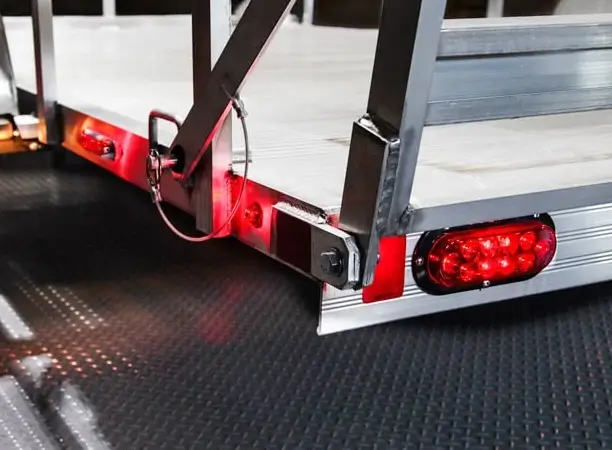
Truck marker lights, also called marker lamps or clearance lights, are small lamps fitted to the sides, front and rear of a truck or trailer. They don’t light the road. They simply show other road users where the vehicle is and how big it is.
You’ll see them on:
- Lorries and HGVs, along the sides and top corners
- Trailers and semi-trailers, along the length of the body
- Vans, horseboxes and plant, where the width or length calls for them
Think of them as an outline. Even from a distance, drivers can see the shape of what’s ahead.
Why do truck marker lights matter?
A big vehicle is hard to judge in the dark, and the dark is when mistakes happen. Good marker lamps help in a few ways:
- They show the size. Other drivers can judge the length and width, which helps with overtaking and passing.
- They show the position. Parked or slow-moving trucks are easier to spot on the roadside.
- They help in bad weather. Rain, fog and spray cut visibility, and a clear outline helps.
- They keep you legal. Many vehicles are required to have them. A dead lamp can get you stopped.
What colours do marker lights come in?
Colour tells other drivers which way the vehicle is facing, so it’s not a style choice. The usual rule is:
| Position | Colour | What it shows |
| Front | White | The front of the vehicle |
| Side | Amber | The length of the vehicle |
| Rear | Red | The back of the vehicle |
Source: Road Vehicles Lighting Regulations 1989. Rules depend on vehicle size and age, so check thevehicle lighting regulations page for your own set-up.
You may also see green and blue marker lamps in the LED range. These are used on some specialist vehicles, so check they’re allowed for your use before buying.
Which types of truck marker lights can you buy?
The LED marker lamps range at Beacons and Lightbars covers a few different styles:
- Side marker lamps. Fitted along the sides to show the length.
- Front marker lamps. Show the front corners of the vehicle.
- Rear marker lamps. Show the back corners.
- Side indicator lamps. Add a turn signal to the side of the vehicle.
- Halo marker lamps. A ring-style light with a different look.
- Marker lamp brackets. Handy for mounting lamps neatly and securely.
Why choose LED truck marker lights?
Older bulb lamps work, but LEDs suit a working truck better:
- Tough. There’s no thin filament to snap when the vehicle shakes.
- Low power draw. Gentler on the vehicle’s electrics, which helps when you run lots of lamps.
- Quick to light. They reach full brightness instantly.
- Less to replace. You’ll change them far less often.
They cost a bit more at first, but most owners find they save money and hassle over time.
What should you check before buying?
A few minutes here saves a lot of trouble later:
- E-mark. Look for an approval mark on the lamp. If it has none, skip it.
- Voltage. Trucks usually run 12V or 24V. Check the lamp matches your vehicle.
- Colour. Make sure it suits where you’re fitting it.
- Fixing style. Surface mount, recessed or on a bracket. Check what suits your bodywork.
- Seal rating. Lamps live outside, so look for a sealed, weatherproof unit.
How do you fit truck marker lights correctly?
Fitting isn’t hard, but a neat job lasts far longer than a rushed one.
- Plan the positions. Mark where each lamp goes and check the spacing against the current rules.
- Disconnect the power. Isolate the battery or the trailer plug before you start.
- Drill and fix carefully. Use the right fixings and keep holes clear of wiring and bodywork edges.
- Seal around the lamp. Water getting in is the most common cause of early failure.
- Wire it properly. Use good connectors and heat-shrink joints, not twisted wires and tape.
- Check the earth. A poor earth causes dim or flickering lamps.
- Test everything. Switch on the sidelights and walk round the vehicle with a helper.
If you’re not confident with the wiring, it’s worth asking a qualified fitter.
How can you keep your truck marker lights working?
- Check them before every trip. It takes a minute.
- Keep them clean. Dirt and road film dim the light.
- Replace cracked lenses. Cracks let water in.
- Look at the wiring. Check for chafing and loose connections, especially after winter.
Dead marker lamps are an easy fix, and a cheap one compared with a fine or an accident.
Are your truck marker lights up to the job?
Whether you’re replacing a failed lamp or fitting out a new trailer, it helps to get the right parts first time. Browse the full LED marker lamps range for side, front, rear and halo styles. Free delivery on orders over £80 ex VAT.
Shop LED Marker Lamps at Beacons and Lightbars →
See also: Improving Electrical Safety Through Proper Protective Equipment Selection
FAQs
1. What are truck marker lights?
They’re small lamps on the sides, front and rear of a truck or trailer. They don’t light the road, they show other drivers how big the vehicle is and where it ends.
2. What colour should truck marker lights be?
White at the front, amber at the sides and red at the rear. Colour tells other drivers which way the vehicle is facing, so don’t swap them to make a lamp fit.
3. Do I need marker lights on my trailer?
It depends on the trailer’s size and age, so check the current lighting rules for your set-up. If you’re unsure, the team can point you in the right direction.
4. Are LED marker lights better than bulb ones?
Most owners prefer them. They last longer, cope better with vibration and use less power, so they suit a vehicle that works hard every day.
5. Why is my marker light flickering or dim?
A poor earth connection is the most common cause, so check that first. If the earth is fine, look for loose connectors or water inside the lamp.